
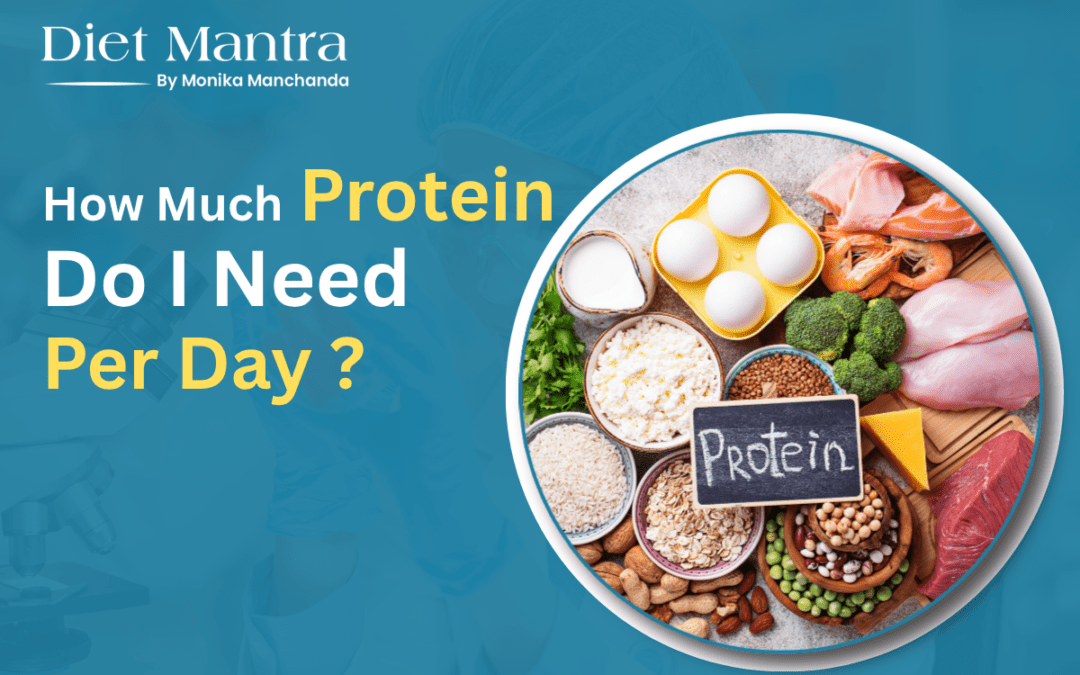
Let’s be honest -most of us never really think about protein until someone at the gym brings it up, or we start feeling constantly tired and someone says, “Maybe you’re not eating enough protein.”
But here’s the thing: protein isn’t just for bodybuilders or fitness fanatics. Every single person -whether you’re a student pulling late nights, a working parent rushing between meetings, or a retired grandparent wanting to stay active -needs protein every day to keep their body running properly.
This blog by Diet Mantra by Monika helps you understand how much protein intake is necessary for the body and why it plays an important role in maintaining overall health.
So let’s break it down in plain, simple terms.
Why Does Your Body Even Need Protein?
Think of protein as your body’s maintenance crew. Your muscles, skin, hair, nails, enzymes, and hormones are all built from protein. When you get a cut, protein repairs the tissue. When you work out, protein rebuilds the muscle. When you fall sick, your immune system uses protein to fight back.
Without enough of it, things start falling apart – slowly but surely. Some real, everyday benefits of eating enough protein:
- You stay fuller for longer, which naturally helps with weight management
- Your muscles stay stronger, especially as you get older
- You recover faster after exercise or illness
- Your hair stays thicker and your nails don’t break as easily
- Your energy levels feel more stable throughout the day Now, how much do you actually need?
The Simple Formula to Know Your Protein Needs
Your body weight is the best starting point. Here’s how it works:
Mostly sitting through the day (desk job, minimal movement): aim for 0.8 to 1 gram of protein per kg of body weight.
Moderately active (you walk regularly, do some light exercise): go for 1 to 1.2 grams per kg.
Regular gym-goer (working out 3-5 times a week): target 1.2 to 1.6 grams per kg.
Athlete or someone actively building muscle: aim for 1.6 to 2.2 grams per kg.
Let’s make this real. Say you weigh 65 kg and have a fairly desk-bound job. Your daily protein goal would be somewhere between 52 to 65 grams. If you’re hitting the gym regularly and want to build muscle, that same 65 kg person might need anywhere from 80 to 130 grams a day.
It’s not a one-size-fits-all number – and that’s okay.
Does Your Age Change How Much Protein You Need?
Yes, more than most people realize.
Children and teenagers are still growing, so they need a decent amount of protein relative to their body size. Skipping on protein during these years can affect height, strength, and overall development.
Adults in their 20s and 30s generally do well with the standard recommendations based on weight and activity level. The key is just making sure protein actually shows up at every meal not just dinner.
People over 50 actually need more protein, not less. As we age, our bodies become less efficient at using the protein we eat, which means you need to eat a bit more just to maintain the same muscle mass. This is why so many older adults start feeling weak or lose muscle it’s often simply a protein gap.
Pregnant and breastfeeding women have higher needs too. The body is working overtime to grow and nourish a baby, and protein is a big part of that process.
Where Can Indians Get Their Protein From?
This is where a lot of people assume there’s a problem especially vegetarians. But honestly, India has some of the best protein-rich foods in the world. You just need to know where to look.
If you eat vegetarian:
Dal is probably the most underrated protein food in Indian cooking. A good bowl of masoor or moong dal gives you a solid protein hit. Pair it with some curd, and you’ve already covered a significant chunk of your daily needs.
Paneer is another winner. Easy to cook, goes with almost everything, and genuinely protein-dense. Rajma, chana, soya chunks, tofu, and sprouts are all excellent options too. Even a simple glass of milk before bed adds meaningful protein to your day.
Nuts and seeds almonds, pumpkin seeds, peanuts are convenient, don’t need cooking, and make great snacks.
If you eat non vegetarian:
Eggs are probably the most affordable, versatile, high-quality protein source available in India. Two eggs in the morning already gives you around 12-14 grams of protein.
Chicken breast, fish, and prawns are all excellent. Even a modest portion at lunch or dinner makes a real difference.
What about protein supplements?
Supplements like whey protein can help if you’re genuinely struggling to meet your targets through food especially if you have a busy schedule or high protein needs from training. But they’re not magic, and they’re not necessary for most people. If your diet is reasonably balanced and includes protein at every meal, you likely don’t need a supplement at all.
How Do You Know If You’re Not Eating Enough?
The signs are subtle at first, which is why most people don’t connect them to protein:
- You feel tired all the time not just after a bad night’s sleep, but constantly, even on days when you’ve rested well.
- Your workouts feel harder than they should, and you’re not recovering well between sessions.
- You’re hungry again very quickly after meals, especially if those meals were mostly rice or roti without much protein.
- Your hair seems to be falling more than usual, or your nails keep chipping and breaking. You keep catching colds or infections more often than the people around you.
None of these symptoms alone means protein deficiency but if several of them ring true, it’s worth looking honestly at what your daily meals actually contain.
Practical Ways to Add More Protein Without Overhauling Your Diet
You don’t need to become a meal-prep person or start eating six meals a day. Small, consistent changes make a big difference over time.
1. Start breakfast with protein. This is the easiest win. Most Indian breakfasts poha, upma, bread-jam, biscuits with chai are almost entirely carbohydrates. Swap or add: two eggs, a cup of curd, a glass of milk, or some paneer bhurji. You’ll feel fuller and more focused through the morning.
2. Make sure dal or some protein is at every main meal. A lot of Indian thalis already include dal, which is great. The problem is portion sizes a small katori of watery dal once a day isn’t enough. Be generous with it.
3. Snack smarter. Roasted chana, a handful of peanuts, a small cup of Greek yogurt, or even just some boiled eggs are far better between-meal options than chips or biscuits.
4. Don’t skip curd. It’s cheap, easily available, and something most Indians already like. Add it to your lunch as a habit.
Can You Eat Too Much Protein?
For healthy people, eating slightly more protein than the recommendation isn’t dangerous. Your body handles it fine.
But eating significantly more than you need say, three times the recommended amount doesn’t give you three times the benefit. Your body uses what it needs and processes the rest. It also doesn’t substitute for the rest of a balanced diet. Carbohydrates give you energy, healthy fats support your brain and hormones, and vitamins and minerals keep everything running smoothly. Protein is essential, but it works best as part of the whole picture.
A Few Myths Worth Setting Straight
“Only gym people need protein.” Everyone needs it the only difference is how much. A sedentary person still needs protein to maintain their organs, skin, hair, and immune system.
“Vegetarians can’t get enough protein.” Completely false. Some of the strongest and healthiest people eat purely vegetarian diets. It takes a bit of planning, but it’s very much doable with Indian food.
“Protein powders are harmful.” They’re not if you’re choosing a decent quality product and using it appropriately. They’re just concentrated food. The concern only arises if someone with a pre-existing kidney condition goes overboard.
Conclusion
Most Indian adults need somewhere between 50 to 80 grams of protein per day as a baseline. Active individuals and those building muscle need more sometimes significantly more.
The most important shift isn’t obsessing over exact numbers. It’s simply making sure protein shows up at every meal, not just occasionally. Dal with lunch, eggs or paneer at breakfast, curd on the side, a handful of nuts as a snack these simple, consistent habits add up over time.
Your body is rebuilding itself every single day. Give it the material it needs to do that job well.
Follow Diet Mantra by Monika on Instagram
Frequently Asked Questions
1. How much protein does a 70 kg person need? Around 56-70 g for general health; up to 140 g for active muscle-building.
2. Is 100 g of protein too much? Not for someone who exercises regularly. It’s a common and reasonable target.
3. Best protein foods in Indian diet? Eggs, paneer, dal, chana, rajma, curd, soya chunks, chicken, and fish.
4. Do I need protein powder? Only if your diet genuinely can’t cover your needs. Food first, always.
5. Is protein bad for kidneys? Not for healthy individuals. If you have kidney issues, check with your doctor.
Recent Comments